Robert Hayes
The Andy Warhol DiariesRobert Hayes is a recurring but fragmentarily recorded colleague in the world around Andy Warhol’s office and Interview. The entries show him proposing a cover subject, accompanying Warhol on professional appointments, hosting colleagues at home, and being missed at work when illness kept him away. His final appearances are shaped by that illness: after weeks of coughing, he was hospitalized with pneumonia, and Warhol later attended his memorial. The diary offers no complete biography or stated medical cause of death; its portrait is made from working encounters, domestic generosity, absence, and the uneasy rituals of remembrance.
Identity and Work
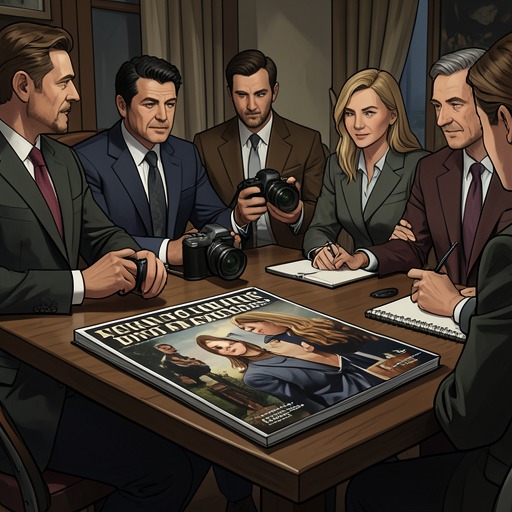
Hayes appears within Warhol’s professional orbit, especially in relation to the office and Interview. In June 1977 he came in with a concrete editorial suggestion: Diahnne Abbott should be the cover girl. Warhol and Hayes called Abbott, who was pleased by the prospect but asked for a day to consider it. Warhol speculated that she might be concerned that Bobby would give her a hard time, but the entry does not clarify the concern or establish what happened next. The episode nonetheless places Hayes in the active work of shaping the magazine, not merely in the background of Warhol’s social life.
His work also brought him into contact with the business arrangements surrounding Warhol. On one occasion he traveled with Warhol and Victor to meet representatives at the William Morris Agency, where the discussion concerned possible representation and offers of television commercials, Broadway work, and film roles. The diary records Hayes’s presence on the trip, but not his contribution to the meeting, so it supports his place among Warhol’s professional companions more clearly than it defines his precise responsibilities. Across these scenes, he is associated with office business and the practical network through which Warhol’s projects and public profile were managed.
Colleague and Host
Hayes’s place in the office community is also visible through the people who gather around its work. In December 1983, Warhol went to the Interview office Christmas party and found Hayes there with his boyfriend, Cisco, who was dying of AIDS. Warhol was shaken by Cisco’s condition and felt unable to deal with it. Hayes’s presence at the party places him within a social circle already confronting illness, although the diary does not identify Cisco’s diagnosis as Hayes’s own or explain the nature of Hayes’s later illness.
The entry also remembers Hayes as a host. Jay and Paige had gone to his home for Christmas dinner, which he had prepared for them; Warhol notes that Hayes had made dinner for them before. The detail gives his hospitality a recurrent, ordinary character: he was not only present at office events but also made room for colleagues at home. Against the later reports of his prolonged absence and hospitalization, this domestic scene records a life still participating in the group’s routines and caring for others through a meal.
Illness and Absence
By April 1984, Hayes had been away from work long enough for Gael to be doing double duty. People at the office reportedly wondered whether his condition was psychological, but those who visited him found that he was coughing. Warhol’s account holds those impressions side by side rather than resolving them: speculation about his state gives way to a physical symptom observed by visitors. The extended cough had already lasted for weeks, making the later news of his hospitalization feel less sudden than the danger remained.
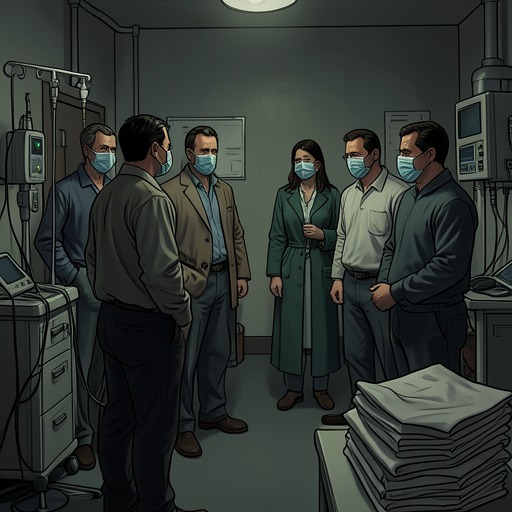
On April 18, Warhol heard that Hayes was in intensive care and that his mother was coming down from Canada. Hayes had been coughing for weeks and had initially described the illness as a bad flu. He had even come in for a business lunch while ill. Warhol recalled seeing small round bandages on him and being told they were from mole removals, an explanation that had seemed reasonable at the time. In retrospect, those details sharpen the contrast between the appearance of an ordinary return to business and the seriousness of the illness that followed. Warhol specifically identifies pneumonia as dangerous, but the diary does not state the underlying cause of Hayes’s illness or give a medical explanation for his death.
Memorial and Remembrance
By July 1984, Hayes had died. Warhol did not want to attend the memorial service and considered giving Hayes’s family a portrait of him instead, but ultimately went because he thought absence might prompt people to talk. His hesitation registers both a personal response to death and a concern about the social meanings attached to attendance. The contemplated portrait would have been a direct, material act of remembrance; going to the service became the choice he made instead.
Afterward, Chris called Warhol to discuss the ceremony, describing it as a fantasy and wondering why Hayes’s former boyfriends had not spoken. Warhol answered that eulogies are always a fantasy, while also insisting that giving them is what people do. The exchange makes the memorial less a settled account of Hayes than a point of friction between private knowledge and public ritual: those close to him could feel that the service left something out, yet Warhol recognized the ritual’s value despite its inevitable simplification. The diary preserves no comprehensive eulogy or final account of Hayes. It leaves him instead in a sequence of specific traces—an editorial recommendation, a place among colleagues, dinners offered at home, weeks of coughing, an intensive-care stay, and a memorial whose omissions remained palpable.